
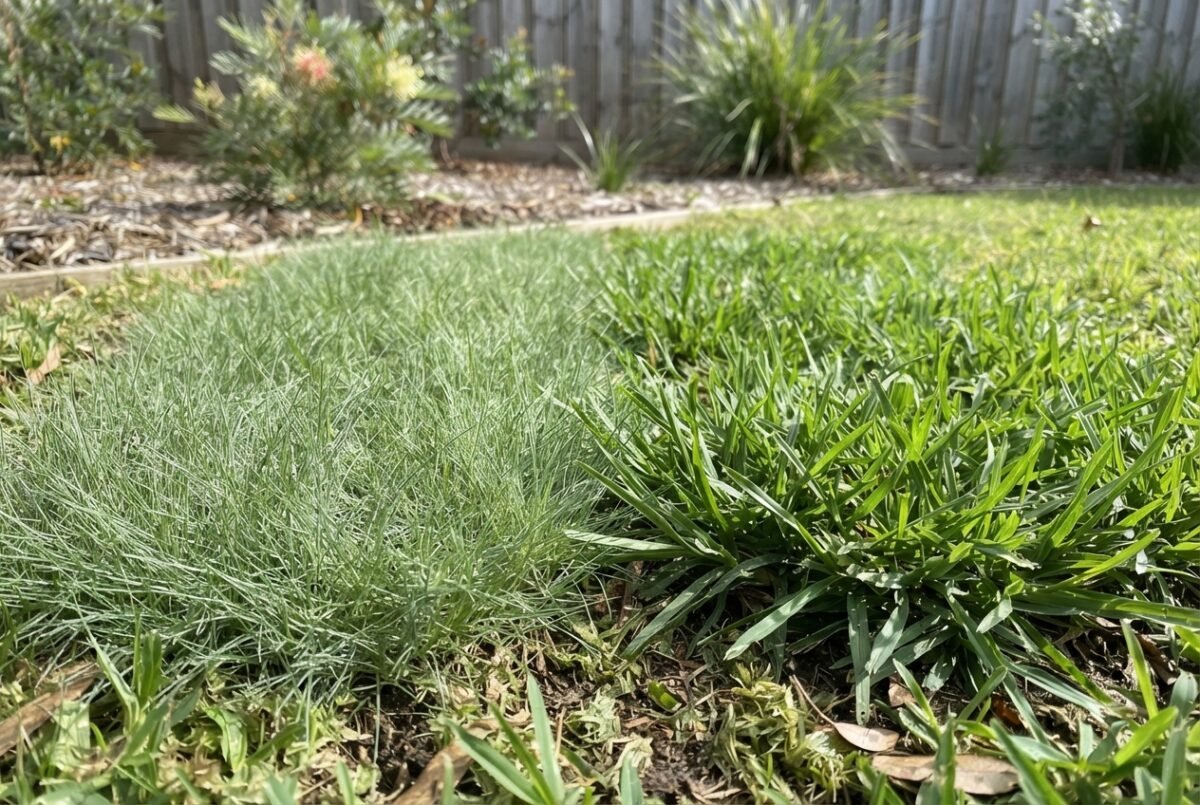
Key takeaway: Choose fine fescue for a shaded, low-traffic cool-season lawn that gets minimal wear, since it’s the most shade-tolerant and lowest-maintenance cool-season grass available. Choose tall fescue for a cool-season lawn that needs to handle real foot traffic, sun and drought, since it’s the tougher, deeper-rooted option of the two. Both only make sense in Tasmania, the ACT and the Victorian and NSW highlands.
“Fescue” on its own hides a real split. Fine fescue isn’t a smaller version of tall fescue, it’s a different group of species entirely, bred for a different job, and mixing the two up leads to planting the wrong one for a shaded, low-traffic yard or a busy, sunny one.
Fine Fescue vs Tall Fescue at a Glance
| Fine Fescue | Tall Fescue | |
|---|---|---|
| What it actually is | A group of related species: creeping red, chewings, hard and sheep fescue | A single species (Lolium arundinaceum, formerly Festuca arundinacea) |
| Leaf | Needle-thin blades | Wider, coarser blades |
| Shade tolerance | Among the best of any cool-season grass | Moderate; noticeably less shade-tolerant than fine fescue |
| Traffic tolerance | Low | Good; deep-rooted and genuinely wear-resistant for a cool-season grass |
| Maintenance | Very low; slow growth, minimal feeding | Moderate |
| Best use | Shaded, low-traffic areas, under trees or on the shaded side of a house | General-purpose cool-season lawn that needs to handle sun, wear and drought |
Choose Fine Fescue If…
- A meaningful part of the yard sits in real shade, since fine fescue is genuinely one of the most shade-tolerant cool-season grasses available.
- The area gets light use rather than regular foot traffic, kids’ games or a dog’s regular track.
- Low ongoing maintenance matters more than a hard-wearing surface; it grows slowly and needs less feeding than tall fescue.
Choose Tall Fescue If…
- The lawn needs to handle real foot traffic, kids, pets or general family use.
- Most of the yard gets reasonable sun, since tall fescue is noticeably less shade-tolerant than fine fescue.
- Drought tolerance matters; tall fescue’s deeper root system copes with dry spells better than fine fescue does.
- You want a self-repairing option: a newer rhizomatous tall fescue cultivar, sold as RTF, fills in bare patches on its own, which fine fescue generally can’t do. Our guide to identifying fescue and ryegrass [INTERNAL LINK OPPORTUNITY: link to “How to Identify Fescue & Ryegrass (Australian Guide)”, draft 1389, not yet published] covers this growth-habit difference in more depth.
Mixing the Two in One Lawn
Many cool-season seed blends combine tall fescue for the sunnier, higher-traffic areas with a fine fescue for the shaded margins, rather than forcing one grass to cover a yard with genuinely different conditions across it. If a property has both a sunny, well-used area and a deeply shaded corner, a blend, or two separately sown zones, is often more realistic than expecting a single fescue type to handle both well.
Both are realistically limited to Tasmania, the ACT and the Victorian and NSW highlands; our full guide to fescue and ryegrass in Australia covers where cool-season turf actually performs and the honest downsides, including its status as a recognised weed outside a deliberate planting.
Common Mistakes
- Planting fine fescue on a busy, high-traffic area expecting it to hold up like tall fescue.
- Planting tall fescue in deep shade and being disappointed when it thins out.
- Assuming “fescue” on a seed bag always means the same grass, without checking which type is actually inside.
Frequently Asked Questions
What is the difference between fine fescue and tall fescue?
Fine fescue is a group of species with needle-thin blades, excellent shade tolerance and very low maintenance needs. Tall fescue is a single species with wider, coarser blades, better traffic and drought tolerance, and less shade tolerance.
Which fescue is best for a shaded lawn?
Fine fescue. It’s among the most shade-tolerant cool-season grasses available, well ahead of tall fescue in low-light conditions.
Can I mix fine fescue and tall fescue in the same lawn?
Yes, and many cool-season seed blends do exactly that, using tall fescue for sunnier, higher-traffic areas and fine fescue for shaded margins.
Which fescue handles foot traffic better?
Tall fescue, by a clear margin. Its deeper root system and coarser leaf structure make it considerably more wear-resistant than the low-traffic fine fescue group.
